Like everyone else, I traveled with a camera. Mine was a little silver point-and-shoot with a mechanical zoom, recommended by the Chassidim at B&H Photo & Video. These are snaps I took in India and Nepal in 1997 and 1998.
In seventh or eighth grade, we got a new rabbi for Gemara class. Gemara is a tricky subject, intricate and abstruse, even if you know a lot about Judaism, and many of my classmates were recent Soviet emigres who didn’t. And now we were faced with a rabbi from Israel whose English was—well, it was different. We spent several consecutive class days trying to figure out what he meant by “barely high stakes,” or possibly “steaks,” until at last we worked out that he was trying to say “barley hay stacks.” That was where I checked out.
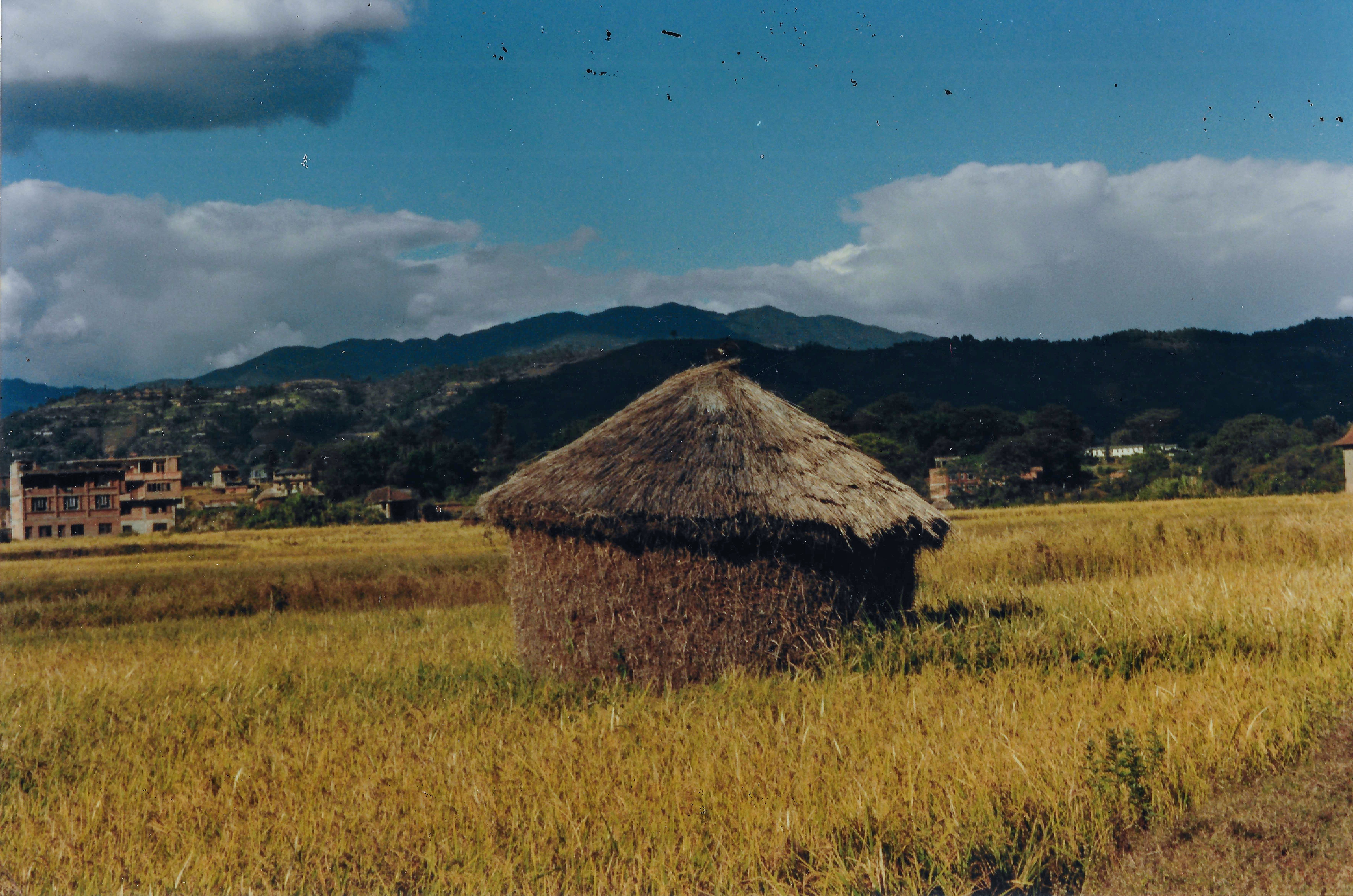
I thought of that in Nepal, on the road from Kathmandu to Bhaktapur, when I took this photo. But even more, I thought of Monet. The word didn’t exist yet, but it was like Nepal had decided to do some Money French countryside cosplay. See for yourself.
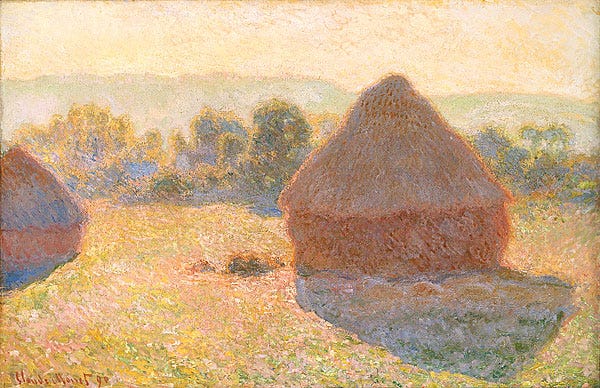
I’d never seen a haystack like that in real life before, with a kind of roof on it. American haystacks were just heaps of hay, big lumpen mounds, like Snuffleupagus having a nap. These were structures. And they were familiar to me from Monet paintings I’d seen, either at the Met or in prints. Which made it a little incongruous to see the same thing in the Kathmandu Valley, of all places. But there it was.
Did they still do it that way in France? I didn’t know. I had never been to France.