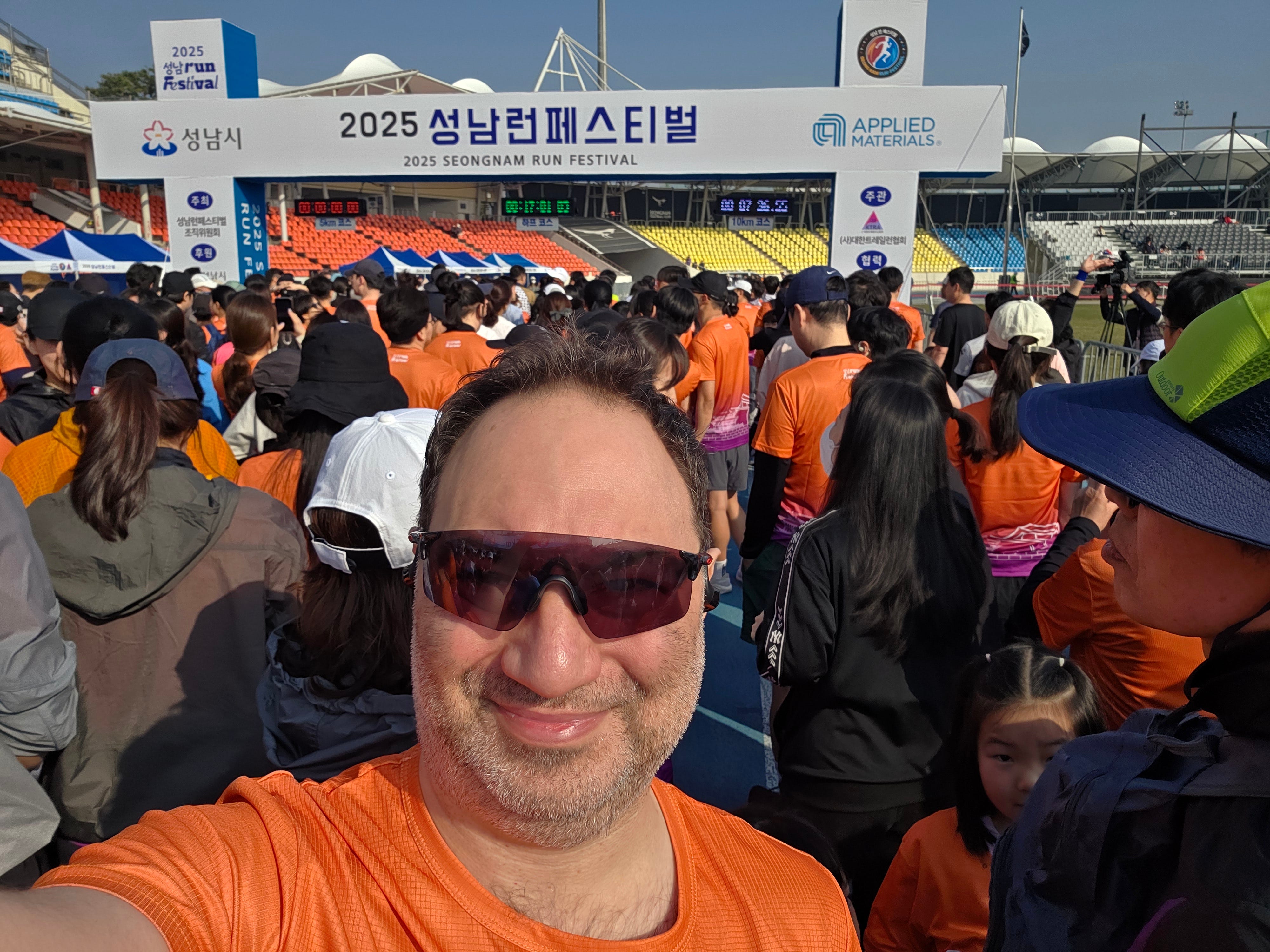
I am an expat.
Yeah, I know it's a charged word. I know it's used for Westerners living outside their home countries, often in non-Western countries. And I know it's not usually extended to non-Westerners living in the West, who are called migrants, immigrants, or often much less nice things.
But that dichotomy, while perhaps unfair, also points to a reality. And it's that reality that I live, as an expat permanent resident in Korea, married and with a family here.
That reality includes the privilege of the West, and of English as a first language, and of Western wealth and education that put me at an advantage compared to much of the world.
But it's also a reality that isn't talked about much, at least in serious spaces. There are scads of books on the immigrant experience to the West, but very few on the expat experience, as I’m defining it, which means Westerners living long-term outside their home countries.
Status anxiety
It’s also a reality that creates a certain anxiety. I wrote a bit about this on Threads, and instantly people were telling me that I had it wrong. Which is how social media works, but still. I was told that I couldn’t be an expat because I’m a permanent resident, or because I’m married, or because I don’t plan on going home again.
Or that I should just be called a migrant like everyone else in the world. And I do get that point. But then, how else to talk about this experience? It is different. Those of us who come from the West have to grapple with different histories, different expectations. The questions that face any immigrants—do we belong?—have a different framing. Are we here to colonize again? Are we bringing Western hubris and privilege? Are we skimming off the locals?
What are we really?
But the Western privilege angle is also maybe overplayed. Yes, it’s there. Yes, there is exploitation, though in our age of billionaires and plutocrats, I’d argue that there’s plenty of the same back home. More to the point, not everyone in the expat community is rich, or even rich in relative terms. Some people from Europe and America now come to places like Korea looking for economic opportunities they can’t find back home. It’s common enough to be a running gag in the English teacher forums. And I’ve known Bulgarians who are part of the Western expat community here too. Bulgaria’s per capita income is about one-seventh that of Korea. As places like Taiwan and Korea, and even Mexico and Thailand, get richer, the economic flows aren’t all one-way.
In fact, there are no good numbers on how many people are living that life—American or otherwise—but I have a sense it’s on the rise. In South Korea, my head used to spin whenever I saw another obvious foreigner on the street, which usually meant someone white or Black. That was back in 2001, when I first came here to teach English for a year. Now? It’s common enough that it’s no longer interesting. The streets around Gwanghwamun on a Saturday are teaming with tourists from the West and from other parts of Asia, and much greater numbers of Westerners are coming here to live. And something you never used to see is now pretty common: Western women with Korean husbands. That’s new.
In fact, the whole landscape is shifting. Median incomes in Taiwan and Korea aren’t very different from median incomes in Mississippi or Spain, and there are parts of Europe where it’s far lower. There’s a change, too, in the balance of cultural power, with Korea as an example. The ascendant soft power means that Korean shows are topping global viewership, Korean movies are winning Oscars, Korean musicians are headlining Coachella, and a Korean novelist just won the Nobel Prize. There is momentum in places like Korea, and it’s readjusting the balance, so that it’s harder to say that a person from the West living in the East or the South is always coming from a position of cultural dominance.
And there is also a different awareness now. BIPOC voices are louder than they used to be in the global conversation, and that’s very much for the good. It means that those of us who do end up far from home arrive with more sensitivity to differences and with less of the old assumption that West is best. Or, if we don’t arrive that way, we get corrected fast and hard, online and in the real world, by much more confident voices than there used to be even ten or twenty years ago.
New lives, new stories
So the old notion of Westerners sort of floating on top of poorer populations in a louche, neo-colonialist fog of easy money is maybe out of date, at least for a lot of places. Technology has made it easier to move abroad—everything from translation apps to local food delivery apps to global banking, plus easy access to your entertainments from home and high-def video calls—and people are doing it for a whole range of reasons.
And our stories are worth telling. This is not the old white-man-among-the-natives stories. This isn’t the age of Chatwin and Theroux. And it’s not the travel blogs and Insta reels either. There is a space for something more.
It’s a story I try to tell in my memoir, If Travel Is Searching, and that I dig into in a different and maybe deeper way in my novel in progress, The Hanok, which is about an American man living in Seoul and grieving his Korean wife. These are stories I’m not hearing.
Let’s tell them.
This is great! So true, and so complicated. My wife and I lived for seven years in Shanghai as university lecturers, watching around us as the old expats with big fancy corporate jobs (with drivers and fancy private schools for the kids) were gradually replaced by a rising class of young, globally educated Chinese. They didn’t all vanish, but the median expat population definitely shifted down the income ladder into middle class gigs with less benefits like ours—from Starbucks China execs to academic precariat. But it’s true that by Chinese averages we still made far more than our local neighbors, floated around on bad Mandarin, and paid local women to cook and clean and watch the kids. Hmm. New Zealand, where we live now, is another deal entirely. Thanks for raising the question and telling your story!
Really enjoyed this post. It offers excellent insight into the expat experience. We don't get a lot of posts from people living abroad in Asia here on Substack (hi, I'm in Thailand!). Appreciate the different perspective here that west does not always mean better or more prosperous.