This chapter is an excerpt from my unpublished memoir, If Travel Is Searching.
My first foreign country was the living room.
I grew up in an ordinary California ranch house: harvest gold appliances, cottage cheese ceilings. But the living room—the living room was different. For one thing, it was forbidden, full of precious and delicate things that could be dangerous in small hands. There was the torch lamp when you first came in, like Narnia’s lamp post, topped with glass like flame. There was the glass-topped table with the bowed Japanese legs, the abstract sculpture in white marble, the glowing silver stereo and the speakers on tall stems like wine glasses and my father’s hand-built record cabinets. To enter you passed through wooden doors too heavy to open without a big person’s help, and into the dark, wood-paneled foyer, then emerged into a sea of rust-orange shag that spread out to the formal dining room on one end and the conversation pit on the other, where there were sheepskin rugs and a gas fireplace of molded concrete that roared an endless, steady roar like Aslan’s breath. When I got a little older, it was in the conversation pit that I would stage epic battles between my Lego spaceships and my dinosaurs, set to a soundtrack of Duran Duran cassettes. On either side of the fireplace were soaring windows that reached up to the rafters and looked out on the high branches of the vast oak tree across the street.
The living room was also where my father kept his best paintings: the beach negative, the green self-portrait, the feet dangling from a Rembrandt sky. But the best painting of all—my father would admit it—was by his teacher, Howie Bosenthal. A triptych, gold-framed, above the dark wooden record cabinet my father had built.
On the left panel of the triptych was a strange tree growing from sand, an empty wooden bowl at its roots. The right panel held a ruin, fluted columns and pointed arches around a grand floor tiled like a chessboard, with no roof and weeds growing up through the cracks. And in the center stooped a tonsured monk in brown cassock, raking furrows in the purple-brown earth, while behind him into the far distance were more and more furrows, the product of a vast and solitary labor.
Where was this place? Who was this monk? My father, after he became religious, saw it as a premonition of Moshiach, painted in Christian language by a Jew who knew no better: the monk was the Jewish people living in exile, away from our ruined temple, engaged in the hard and thankless labor of preparing the ground for the messiah’s coming. It’s plausible, but like much of the best art—like the Bible itself—that painting continued to hold your attention, year after year, precisely because it threw up so many meanings and possibilities without ever giving you enough to settle on just one.
That living room was where I discovered music, Bitches Brew and Led Zeppelin II, dug out of my father’s record collection. It was where I did acid the first time, and where my wonderful terrible band practiced. It was where I staged wrestling matches against my brother, who was ten years younger than me but won every time, much to our even younger sister’s disappointment. But the most important thing that went on in that living room—well, it happened every Tuesday night, starting at the beginning of the world.
When I was born, my parents started looking for some connection to Judaism so their son would know what it meant to be Jewish. They were part of the generation that grew up in the Jewish enclaves of New York City, where trying to be Jewish made as much sense as it did in the shtetl. My father’s family was the more secular, going to temple on the High Holidays and not much else. My mother’s father was one of the founders of a Reform temple in Queens, and my mom went to a young and still fragile Israel as a teen, but hers was still a kind of ambient Jewishness. Out in California, though, there was no such thing, even if Doctor Goldin and his wife Blossom—later she’d switch to Bluma—lived down at the end of the block and kept that menorah in the window.
And so my parents joined the nearest synagogue. Friday nights we went to Temple Rodef Shalom to hear Don the Cantor declaim over organ music and Rabbi Barenbaum give sermons about the suffering of Soviet Jewry, which had me wondering for a while what was wrong with their necklaces and rings. And then afterward there was a great catered kiddush with fruits and pastries. It was all very refined and pleasant, and I thought of it as related to my violin recitals and our trips to the symphony, because they all required a button-down shirt and a brass-button blazer and a clip-on tie and pinching penny loafers.
My parents found the whole thing a little bland. They were hippies, part of a generation of spiritual seekers—we had Carlos Castaneda books and The Psychedelic Experience on the shelves—and they were hipper than the Rodef Shalom crowd. They never made any friends there. Rodef Shalom had a very establishment air, and my parents, my dad especially, wanted to be freaks. Rodef Shalom was not the least bit freaky.
But there were starting to be rabbis around who were. Over in Berkeley there was a Chabad House on campus, part of the growing Chassidic outreach movement spearheaded by the Lubavitcher Rebbe from his headquarters in Brooklyn. Most of the shluchim, the messengers, were from within the Orthodox community, but in Berkeley they had Rabbi Langer, who was a ba’al teshuva, a returnee, someone who’d grown up outside the religious community and embraced it as an adult. Langer rode a big motorcycle and was friends with people like Bill Graham and Carlos Santana. He was a bona fide freak.
There was also a minyan that met in Mill Valley on Wednesday mornings, led by Rabbi Rindenow from the Hebrew Academy, the Orthodox Jewish day school in San Francisco that I switched to in third grade. They sent Rindenow because he was the new guy. One day my father got to talking with him about the Torah study class he and my mom had been hosting. It was just a bunch of Rodef Shalom folks going through the Books of Moses on their own, and it was at our house because my parents were the only ones who would’ve needed a babysitter otherwise. Rabbi Rindenow asked my father if he wanted a teacher, and my father said yes.
“But I can only teach it in the way I know,” Rindenow said. And so began a Tuesday night ritual that would continue for years: the rabbi, coming into the living room with his long black beard and his black suit and his stack of giant leatherbound holy books with gold embossed covers, taking his seat in the leather wing chair and holding forth, pasuk by pasuk, verse by verse, starting from the creation of the universe.
The original students didn’t last long. These were Reform Jews who understood that the Bible was a historical document assembled by various authors at various times. Rindenow didn’t approach it that way. He was a direct descendant of Rabbi Menachem Twersky, the founder of the Chernobyl Chassidic lineage, who had studied with both the Maggid of Mezeritch and the founder of Chassidus, the Baal Shem Tov. He taught Torah wholly from within that traditional Jewish lineage, quoting from all the classic sources: Mishna, Rashi, Onkelos, Rambam. Every word, every letter of the Torah was given by God, perfect and intentional, and our responsibility was to suss out all the meanings, to explain every seeming anomaly, all the repetitions and omissions and oddnesses that modern scholarship attributed to multiple authorship and oral traditions and the quirks of transmission.
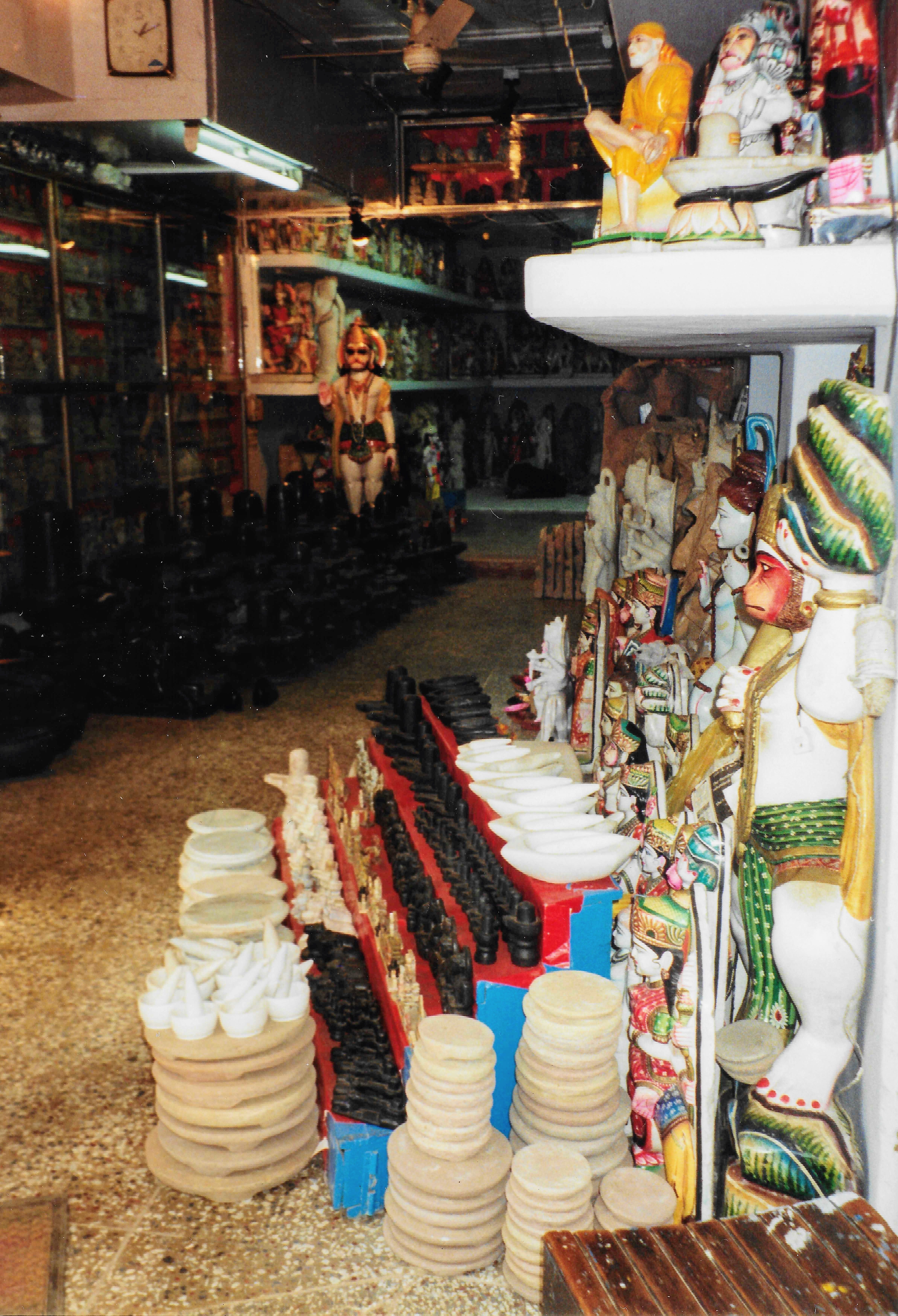
The modern scholars were right, and Rindenow was wrong. But in telling it his way, Rabbi Rindenow brought Torah to thrilling, exotic life. In those early years, when the Tuesday night class was an excuse to stay up late, I would join in, sitting on the sofa until I slid down off it to lie under the glass-topped Japanese table, as the rabbi took us on a wild journey of decoding, digging out mysteries, and hearing strange tales of this ancient world our forefathers lived in, a world of tents and sheep and idols and magic. There was Rachel sneaking off with Laban’s family gods hidden in her saddle bags, and Jacob tricking his father Isaac and wrestling with the angel. And there was the young Abraham—still Avram then—smashing all the statues in his father’s idol shop, in the world’s very first fit of monotheistic iconoclasm. Knowing his father would be angry, Avram placed a stick in the hand of one remaining idol. When his father asked, “Who did this?” Avram pointed to the idol with the stick. His father of course told him this was nonsense, that no statue could do any such thing. “Then why,” asked Avram, “do you worship them?”
Many years later, when I first decided to step out into the world, the country I chose was India, not Israel. By then, Rabbi Rindenow’s brand of Judaism—my father’s brand—had become something to push against. I didn’t want Torah stories, and I sure as hell didn’t want all the rules and restrictions that came with it. So it makes sense that when I was finally old enough to travel, I didn’t go off to Israel to visit Abraham, Isaac, and Jacob in Hebron.
Instead, entirely by accident, I chose the one region left in the world that Avram might have landed in and thought, “Oh, sure. I get it.” And nowhere would he have gotten it more than in Varanasi.
Like what you’ve read? Get in touch and learn about being a beta reader at josh@joshphilipross.com.