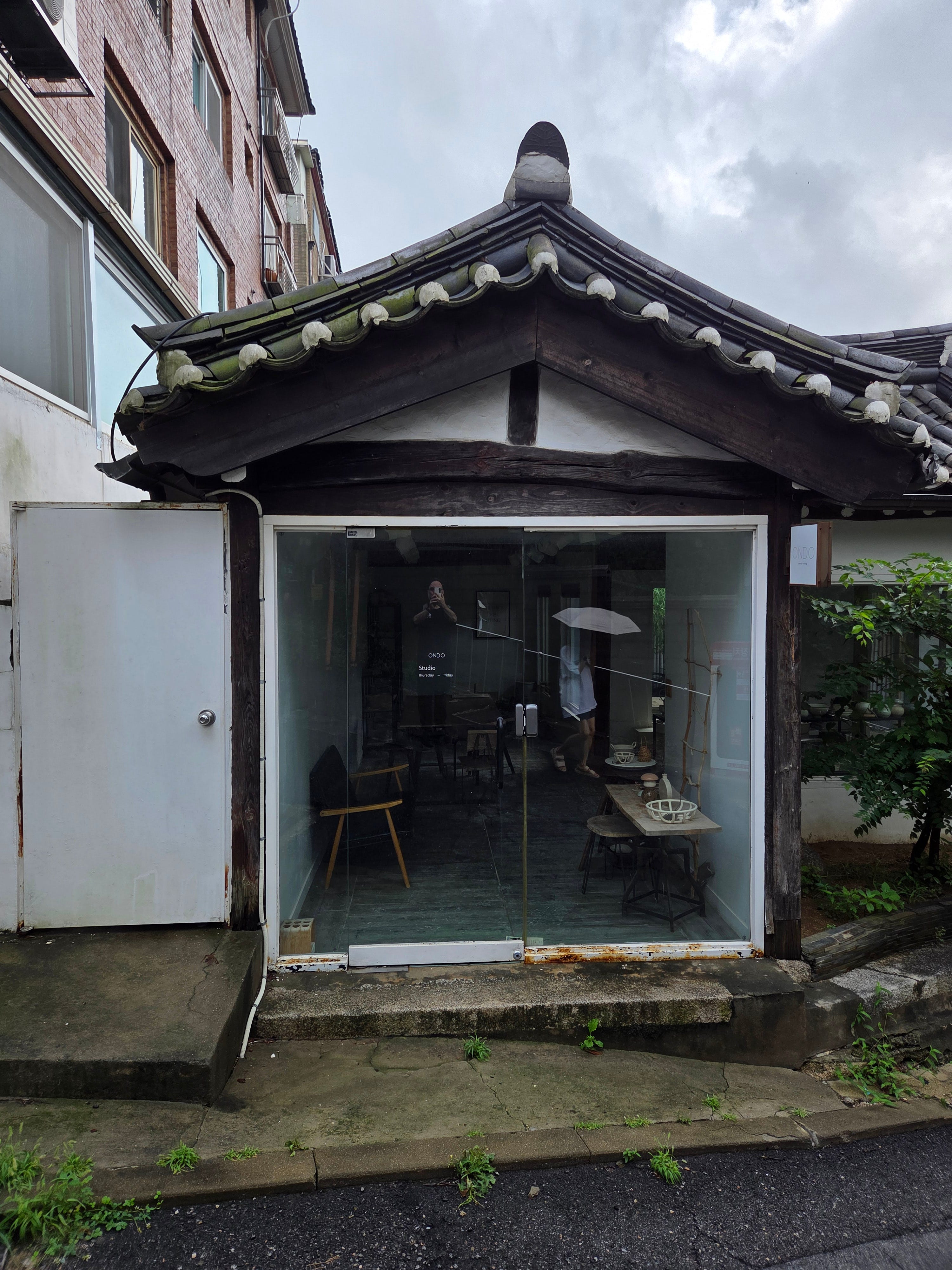
My novel in progress is about an American, Bobby, who lives in a hanok in Seoul. He lived there with his Korean wife until she passed away. It’s a book of mourning, love, loss, and renewal.
I am also an American living in Korea with my Korean wife, and I reassure her that Bobby’s wife, Aeyeon, isn’t her. “Who is that bitch?” she’ll say. Then I remind her that I’m not Bobby either. And that’s true and not true, because of course our lives, our jokes, our ways of living are at the heart of the novel.
It’s a love letter to my wife.
And because she loves me, she came with me to walk around Bobby’s neighborhood of Bukcheon and to help me understand it better. We looked at hanoks, and we wander up around the hills to the north, in Samcheongdong, where houses from different eras all stack up on each other.
But before all that we had lunch.
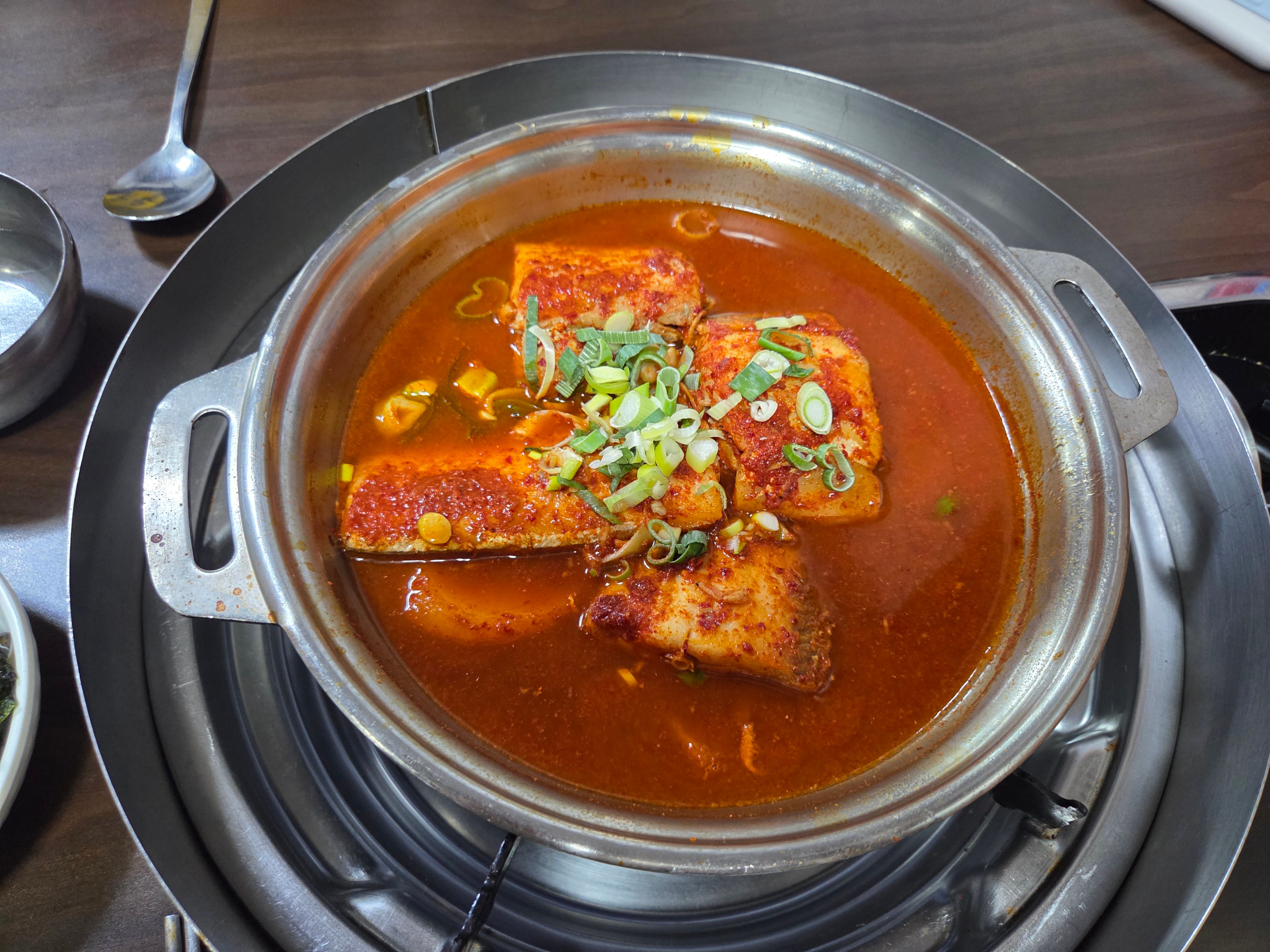
My wife took me to a place called Gangu Mijuguri, a fish restaurant with a menu that left me utterly helpless. Outside, phalanxes of college-age tourists marched by in hanbok that looked sweltering in the humidity. All along the street were cafes and restaurants with signs in English, offering easier menus—kimbap, mandu, beef bulgogi. In here, though, there wasn’t a shred of English. Water was sipped from metal bowls. The only other people were a group of old men laughing together and drinking makgeolli.
My wife ordered. She helped me eat too, deboning the fish for me, showing me which things do dip in what and wrap how. That’s how it is when we go to real hanshik places like this. She has an eye for good restaurants and loves to share them with me.
All this made me think of poor Bobby, lost without his wife. They used to go to restaurants like this, before the accident. Now he doesn’t really have a way in. He could try on his own, but he wouldn’t know what to order, what to do. It would be lonely. And he doesn’t have a group of old men like that either to hang out with—high school or college or old company buddies.
Bobby is fictional, but Bobby is also one possible future for me. I’m writing my love, and also my fears. What will it mean if I’m alone someday in this country that is my home but not my own? Who will I hang out with? Most of the other foreigners my age will have headed back to their own countries, I expect.
My wife felt all this in the moment. Her eyes flashed as she wondered at how brave I am to live my life here. I suppose I am. Maybe it’s the Jewishness—that sense of never really having belonged anywhere, never having been fully accepted—that made the bravery possible. I’m not sure I’m wanted here either, at least by the larger public. But it’s my home. My family is here. My wife and daughter. My life.
Nowhere is anywhere else.